
 English


Da desvalorização interna à revalorização do trabalho: o caso de Portugal
Investigador
Este projeto analisa as transformações do regime de emprego ocorridas em Portugal, nas últimas duas décadas, no contexto da reestruturação da economia global e das suas consequências no emprego e no trabalho. Os impactos adversos no trabalho da crescente internacionalização da produção e da concomitante financeirização têm sido evidentes num país vulnerável à deslocalização da produção, aos desequilíbrios macroeconómicos e ao endividamento. Estes impactos atingiram o seu apogeu com a crise financeira global e o consequente resgate financeiro da tróica em 2011. O Memorando de Entendimento especificou uma reconfiguração do regime de emprego, orientada para a desvalorização interna, que veio a ser levada à prática, afetando instituições e regras sobre a proteção do emprego, os tempos de trabalho, as prestações de desemprego e a negociação coletiva. Com base em investigação anterior que caracterizou a reconfiguração institucional associada à desvalorização interna como regressiva e responsável pela transferência de rendimento do trabalho para o capital e pelo desequilíbrio de poder desfavorável às organizações dos trabalhadores, o projeto pretende ampliar esta pesquisa por duas vias. Primeira, alargar a avaliação da desvalorização do trabalho a dimensões-chave da qualidade do emprego e condições de trabalho que possam ter sido diretamente afetadas em resultado da reconfiguração do regime de emprego (em particular, salários, tempos de trabalho e segurança do emprego). Segunda, identificar as consequências de longo prazo da ?desvalorização interna, os seus mecanismos impulsionadores e os meios para os neutralizar, através da análise estratégias dos atores e dos seus recursos de poder ao nível nacional, sectorial e de empresa. O projeto parte da conjetura de que a reconfiguração do regime do emprego em Portugal e a desvalorização interna podem ter acelerado um processo de desvalorização cumulativa do trabalho, envolvendo perdas de competência e aptidão, retração de investi...
Informação do Projeto
2018-09-15
2022-06-14
Parceiros do Projeto
- DINAMIA'CET-Iscte (IT)
- CES-UC - (Portugal)
Rester en Ville
Assistente de Investigação
Propomos uma abordagem comparativa internacional para submeter-se à mesma inquirição os bairros afetados por mudanças, por hipótese, cujas causas são comparáveis ??(globalização, metropolização, transformação dos governos nacionais e locais), mas também as consequências em termos de efeitos sociais e mudança. As relações entre resiliência e resistência nesses quatro bairros urbanos da Europa Central serão estudadas com base nas práticas dos residentes e dos usuários, em que consideramos menos a lógica tradicional do "distrito trampolim" do que a existência de esferas da vida, pertences e usos que vão muito além do bairro, e podem ser descritos como "sócio-esferas", e ser entendidos através da noção de "cenas". A análise será baseada em entrevistas sobre o curso de vida de indivíduos e famílias que vivem no bairro no momento da pesquisa, e particularmente aqueles que lutam para se manter desenvolvendo estratégias residenciais (de acordo com a lógica família, amigos, profissionais), bem como aos indivíduos e famílias cuja presença no espaço público e seu apego ao território (manifestado pelas atividades e práticas de certos lugares) expressam e sustentam o desejo de terem um apelo gratuito. O objetivo de "ficar na cidade" é, portanto, a espinha dorsal do inquérito a 4 distritos centrais das principais cidades europeias: Paris, Bruxelas, Lisboa e Viena. Essas entrevistas, 240 em número (60 por zona), serão complementadas por observações baseadas no local, baseadas em sistema, na medida em que ofereçam capturas de resistência / resiliência. Os "sistemas de lugares" assim elaborados são combinados com "sistemas de ligação" que permitem descrever a hospitalidade da área de recepção, as suas comodidades e a possibilidade de algumas famílias pobres permanecerem no centro da cidade, apesar de, e talvez por causa da metropolização.
Informação do Projeto
2014-09-01
2015-05-31
Parceiros do Projeto

Freedom of Association and Collective Bargaining in Indonesia, Jordan and Malawi
Assistente de Investigação
No âmbito do projeto OIT-Sueco sobre liberdade de associação e negociação coletiva (GL0 / 09/60 / SID), para a Organização Internacional do Trabalho e sob a supervisão do Diretor Principal de Projetos, Pierre Guibentif, o DINÂMIA'CET-IUL realizará análises aprofundadas dos dados recolhidos durante as missões de diagnóstico para a Indonésia, a Jordânia e o Malawi (a serem fornecidos pela equipe do projeto), realizando as seguintes tarefas específicas:
- Realizar uma análise descritiva dos aspectos qualitativos e quantitativos dados recolhidos no campo durante a missão de diagnóstico na Indonésia;
- realizar uma análise descritiva dos dados qualitativos e quantitativos recolhidos no campo durante a missão de diagnóstico na Jordânia;
- realizar uma análise descritiva dos dados qualitativos e quantitativos recolhidos no campo durante a missão de diagnóstico para o Malawi.
Informação do Projeto
2013-10-31
2014-01-31
Parceiros do Projeto
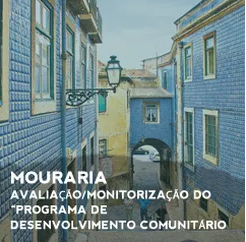
Avaliação/Monitorização do “Programa de Desenvolvimento Comunitário para a Mouraria”
Assistente de Investigação
Este projeto procurou recolher, analisar e fornecer um conjunto detalhado de informações sobre os projetos financiados pelo "Programa de Desenvolvimento Comunitário para a Mouraria", visando uma análise integrada do PDCM, sua implementação e funcionamento, bem como os objetivos alcançados nesta fase de trabalho: "a análise individual e comparativa deve se concentrar em cada projeto em relação à realização dos objetivos propostos e a contribuição de cada um deles para os resultados de cada e cada eixo em relação aos objetivos gerais do PDCM ".
Informação do Projeto
2012-11-30
2013-12-31
Parceiros do Projeto
Domestic work and domestic workers: Interdisciplinary and compared perspectives
Assistente de Investigação
The Project provided an interdisciplinary and comparative analysis of the phenomenon of domestic work, including some new empirical research. It mainly concerned the nature of the legal regulation of domestic work and domestic workers, contextualized by socio-legal and socio-economic analysis. Its focus is on law and society, including the impact of changes in the law on society, and encompassed both issues arising from domestic work and issues concerning domestic workers. The Project is focused on Portugal, where there has been no study of the legal implications of the nature of domestic work and the employment relationship, the identity of the workers, or the wider impact of the commodification of such domestic work. It will also consider, in a comparison, the United Kingdom, Brazil, India and Mozambique.
Informação do Projeto
2007-01-01
2011-12-31
Parceiros do Projeto
