
 Português

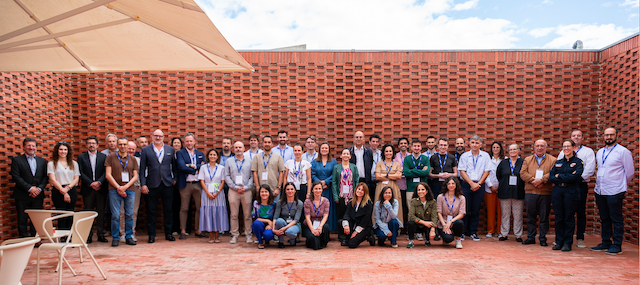
Launched on the 18 and 19 June 2024 in-presence at Iscte - Knowledge and Innovation, Portugal, the RETIME project will support different stakeholders and decision-makers in adopting timely reaction strategies to natural hazards such as severe storms, flash floods, fires and heat and cold waves.
Coordinated by ISTAR-Iscte, the RETIME project is funded by the European Union to the tune of around 5 million euros. It brings together 18 partners from 8 European countries, including universities, research centres, SMEs, non-profit organisations and public authorities. This four-year European project will run until April 2028.
The welcome session of the face-to-face kick-off meeting on 18 June 2024 was attended by Filipa Roseta, Lisbon City Council's Councillor for Housing, Local Development and Public Works, and Iscte's Vice-Rector for Research and Technological Modernisation, Professor Jorge Costa.
The consortium visited the Lisbon's pilot site, the Boavista neighbourhood, guided by a representative from GEBALIS (Lisbon City Council's Housing Lease Management) and also the Lisbon's Civil Protection Headquarters, with a demonstration of Lisbon's Civil Protection Dashboards, the framework of the Lisboa Inteligente management platform and Information System and Lisbon's General Drainage Plan.
By integrating participatory methodologies with a data-driven framework, the project RETIME will characterise vulnerable groups and hotspots, strengthen the resilience of buildings, present context-specific adaptation plans and raise public awareness of natural and human-induced disasters and their impacts.
The project RETIME rethinks urban adaptation strategies and undertakes to test solutions in three pilot areas to anticipate and react to extreme phenomena without leaving anyone behind.
RETIME will introduce a data-driven tool to aggregate existing data from meteorological stations, sensor networks and satellite images, combined with automated on-site surveys that integrate 3D models and simulate the impacts of current phenomena and future projections. RETIME will develop four digital adaptation solutions to reduce risks in urban areas: 1) a sensor-based automated warning information technology system, 2) a Digital Building Twin, 3) a Decentralised-Ledger Building Renovation Passport, 4) a Resilience Knowledge Hub decision support platform.
These solutions will be designed and tested in three pilot areas: Lisbon (Portugal), Žilina (Slovakia) and Tartu (Estonia), providing guidelines and tools for their expansion and adaptation to other European urban areas.
"The RETIME project adopts a people-centred and locally contextualised approach that will allow us to develop innovative tools, provide timely warning systems to relevant stakeholders, recommend strategies for improving the resilience of buildings and minimising the impact of future disasters," said Associate Professor Catarina Ferreira da Silva, RETIME's Global Coordinator. "The results of this project are expected to provide solutions that improve energy efficiency and independence, and the transition to zero-emission buildings, contributing to reducing environmental impacts."
The RETIME project is aimed at vulnerable inhabitants, local governments, urban planners, building owners and other stakeholders interested in urban issues involved in resilience and mitigation of the effects of extreme phenomena. The RETIME project provides these groups with effective adaptation tools and comprehensive knowledge. Ultimately, RETIME aims to benefit urban populations, with special attention to the various vulnerable groups that are most susceptible to the impacts of climate-related events.
