
 English

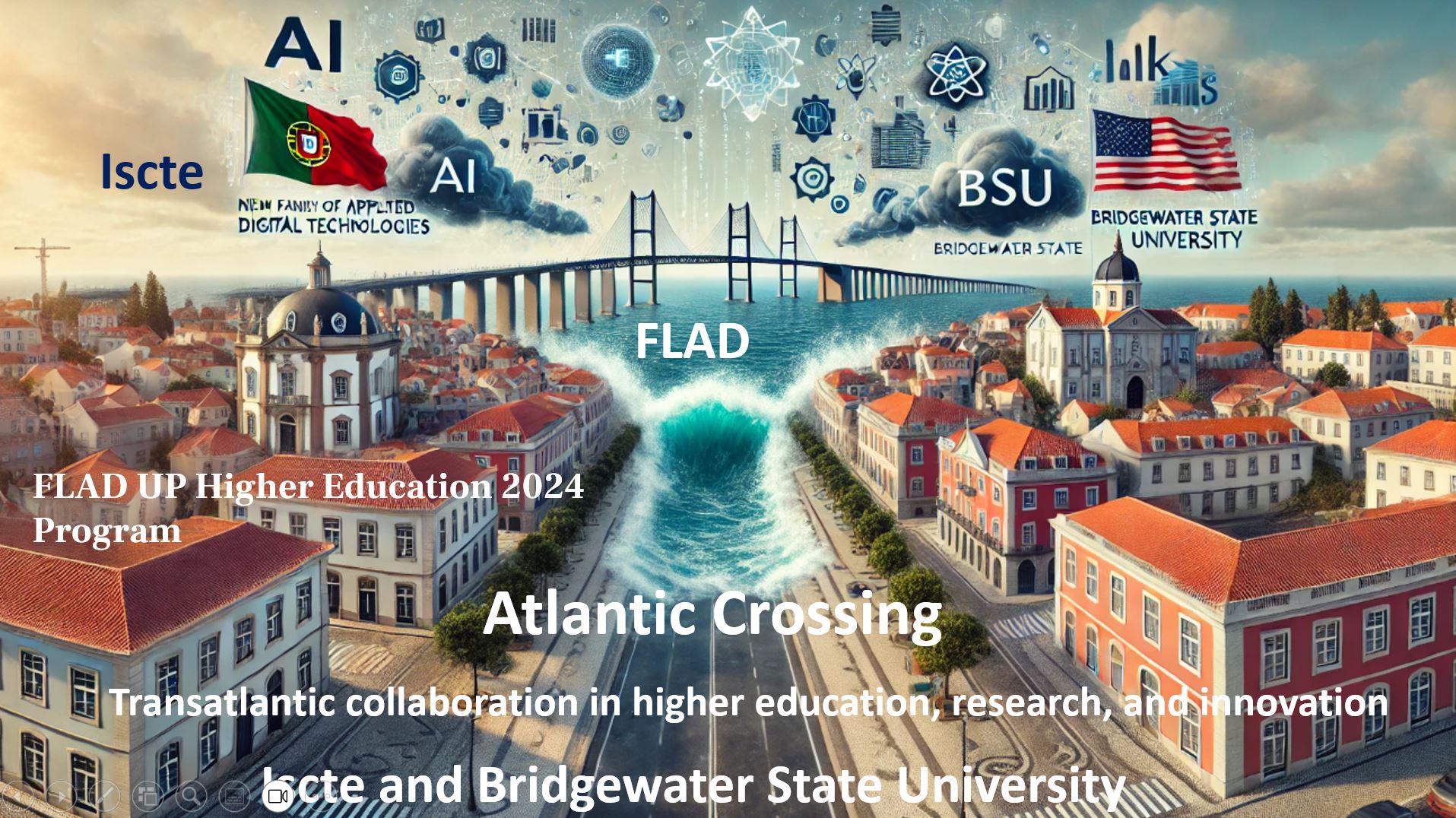
Atravessar o Atlântico para a cooperação científica e de ensino-aprendizagem
Investigador
O principal objetivo da proposta AtlanticCrossing é desenvolver uma parceria entre duas instituições de ensino superior, uma portuguesa, o Iscte - Instituto Universitário de Lisboa, e uma dos Estados Unidos da América, a Bridgewater State University - BSU. Esta parceria foi concebida para ser mutuamente benéfica, visando iniciar o esforço de desenvolvimento de especializações conjuntas, programas de pós-graduação e a atribuição de graus académicos conjuntos num futuro próximo em áreas científicas de interesse mútuo, tais como Cibersegurança, Inteligência Artificial e Tecnologias da Linguagem, Inovação Empresarial e Ensino-Aprendizagem. Através da colaboração, ambas as instituições poderão tirar partido dos pontos fortes e dos recursos da outra, melhorando a qualidade do ensino e da investigação. A proposta visa ainda desenvolver competências para docentes e estudantes através da Aprendizagem Internacional Colaborativa Online (COIL), aplicada em Unidades Curriculares (UCs) de cursos de licenciatura de ambas as universidades, com enfoque nas áreas científicas acima referidas. O programa inclui actividades ao longo do ano letivo em ambiente COIL e duas estadias de curta duração (1 semana) para docentes e estudantes: uma organizada no Iscte em meados de janeiro, com a visita de docentes e estudantes da BSU, e outra na BSU, na primeira semana de junho, reciprocamente. Coordenaremos projectos de investigação conjuntos e interdisciplinares com ênfase na cibersegurança e nas tecnologias da linguagem. Isto será realizado no âmbito de iniciativas de investigação aplicada e baseada em projectos. Além disso, facilitaremos a participação do Iscte no Simpósio anual de investigação para licenciados da BSU, proporcionando uma plataforma para os estudantes do Iscte apresentarem os seus resultados inovadores neste evento dos EUA. No domínio da cibersegurança, organizaremos sessões de formação conjuntas abrangentes, recorrendo a ambientes competitivos e baseados em desafios, como o “...
Informação do Projeto
2024-10-01
2025-06-30
Parceiros do Projeto
- ISTAR-Iscte (DLS) - Líder
- BSU - (Estados Unidos da América)

Models and Instruments for Transforming Higher Education Systems through Transnational Multi-Sector Links
Investigador
Today, in the digital era society is evolving at a rapid pace and investing in education have vast social and economic advantages for it. It is the education that allows people to have access to SDGs 4. It is not argued that a better educated people break away from poverty more easily, help to reduce inequalities and achieve gender equality; they are more tolerant, they contribute to reduce crime, to increase political and civic participation and generally to have more peaceful societies with reduced inequalities and imbalances. Within this context the project brings together European, Asia and African academic and non-academic organizations in a staff exchange program, with the goal to explore, design and deploy innovative and context sensitive solutions for transforming higher education systems. This international and multi-sector consortium is created as a platform for collaboration and is united by the principles of innovation, partnership and solidarity with the purpose to research and identify successful contemporary models and modern instruments that can help higher education transformation and support the sustainable and effective adaptation of the higher education systems of the consortium members to the digital age. The aim of the project is study the process of digitalisation in different organisations and offer solutions concerning the improvement of the digitalisation practices. The project consortium comprises both academic and non-academic partners as well as experts in diverse fields such as, but not limited to, economics, law, management, linguistics. This allows a broad and an indepth approach to digitalisation. On the basis of the identified gaps in the digitalisation process, the project will propose approaches and methodologies which will be realised as different disciplines for the academic institutions’ partners in order to build sustainable competences for the transfer of knowledge and skills
Informação do Projeto
2023-12-01
2027-11-30
Parceiros do Projeto
- CIES-Iscte
- BRU-Iscte
- ISTAR-Iscte
- DINAMIA'CET-Iscte
- UNWE - Líder (Bulgária)
- UBB - (Roménia)
- METU - (Turquia)
- ESPAP - (Portugal)
- AZ - (Bulgária)
- RM - (Bulgária)
- C.School - (Roménia)
- Novarge - (Turquia)
- Associação 101010 Portugal (Escola 42) - (Portugal)

Artificial Intelligence and Data Science for Public Administration Portugal Innovation Hub
Investigador
Os objetivos estratégicos e o plano de ação do AI4PA Portugal têm um claro alinhamento com as principais áreas de foco do Plano de Ação para a Transição Digital:
Pilar I — Capacitação e inclusão digital das pessoas
Pilar II — Transformação digital do tecido empresarial
Pilar III — Digitalização do Estado
A atividade do Polo irá prosseguir seis objetivos estratégicos, alinhados com o Plano de Ação para a Transição Digital, a saber: a otimização das políticas públicas nas várias áreas da governação com base na Inteligência Artificial e na promoção de soluções tecnológicas digitais inovadoras; a melhoria da interação dos serviços públicos com os cidadãos e as empresas; a avaliação dos impactos sociais e das implicações éticas das tecnologias, incluindo da Inteligência Artificial; o aumento das competências digitais das entidades públicas e das pequenas e médias empresas (PME) que lhes prestam serviços; a disseminação de boas práticas e soluções reutilizáveis de origem nacional e internacional; e a melhoria da governação para a transição digital nas várias escalas de intervenção do Estado.
O AI4PA Portugal alinha a sua intervenção com o modelo estabelecido na rede europeia de polos de inovação digital visando os serviços prioritários dos Polos de Inovação Digital descritos o Plano de Ação para a Transição Digital,
1- Experimentação e teste de tecnologias digitais na fase prévia à decisão de investimento; 2- Qualificação e formação em competências digitais; 3- Apoio na procura de financiamento para investimento em tecnologias digitais; 4- Atuação como facilitador juntando diferentes atores.
Informação do Projeto
2023-01-01
2025-09-30
Parceiros do Projeto
- ISTAR-Iscte (DLS) - Líder
- AMA - (Portugal)
- AIP – CCI - (Portugal)
- ANPME - (Portugal)
- AUDAX - (Portugal)
- CMS - (Portugal)
- CMV - (Portugal)
- CCDR Algarve - (Portugal)
- CoLABOR - (Portugal)
- DGEEC - (Portugal)
- Esri Portugal - (Portugal)
- GEP/MTSSS - (Portugal)
- INDEG - (Portugal)
- IPPS - (Portugal)
- Mentortec - (Portugal)
- MORE CoLAB - (Portugal)
- NOVA IMS - (Portugal)
- Oeste CIM - (Portugal)
- UNINOVA - (Portugal)
- UNU-EGOV - (Portugal)
