
 English

Housing as a Tool for Freedom: A Future Away from Incarceration
Coordenadora Global
Today, the world’s prisons are home to circa 11.5 million people globally, an increase of more than 27% from 2000. Post-incarceration is a major challenge that reflects and contributes to the broader systemic issues within the criminal justice system, expressed by high recidivism rates. This interdisciplinary project proposes to reframe what spatial assemblies, edifices and policies are necessary on the path from prison, addressing the reentry process using housing as an infrastructure of care, incorporating an abolitionist epistemology. HOUSINGFREEDOM aims to: — Develop an innovative conceptualisation for studying housing in the context of post-incarceration, by conducting a far-reaching study of reentry processes. This approach is designed to overcome limitations in global scholarship on the nexus between postincarceration life and housing insecurity. — Map and study how can the narratives of the formerly incarcerated people and their housing struggle facing reentry inform practical interventions, shaping more just urban landscapes, under a ‘abolition by design’ approach, also offering incisive policy analysis to informs policy reform. — Provide a solid conceptual, methodological, and empirical foundation for carcerality studies across a vast range of disciplines, through a participatory approach. Methodologically, HOUSINGFREEDOM offers innovative design-based spatial and visual analysis strategies to reimagine spatial justice and decent housing for those who leave incarceration, along mapping and multimodal ethnography. A research-by-design approach to humanize (not criminalize) by design will engage a Community of Practice with those affected by carcerality, centred in Portugal, Belgium and Norway. Radical and ambitious, HOUSINGFREEDOM bridges the gap between these seemingly distinct fields, carcerality and housing instability, by shedding light on the cyclical nature of poverty, crime, and social exclusion.
Informação do Projeto
2026-02-01
2031-01-31
Parceiros do Projeto
- DINAMIA'CET-Iscte (CT) - Líder
Mapping social value of participation in collaborative housing: From a knowledge-based to evidence-based perspective
Coordenadora Local
The ever-increasing challenge of affordable and adequate provision of housing in Europe calls for collective actions and approaches from different perspectives. Being a social sector, housing requires special attention on the aspects of participation, social cohesion, interaction, and integration in its physical and functional manifestation of space. However, these aspects are ignored since housing is largely driven by its transformation as a commodity. Thereby, lack of co-creation and inclusiveness of civil society in the whole design, planning, and delivery process along with the private and public sector or municipalities involved remains one of the major challenges. In this direction, this project is envisioned to support the transition of the status-quo of housing towards more participatory and inclusive governance, development, and implementation through developing a citizen engagement model.
Informação do Projeto
2024-01-10
2027-07-09
Parceiros do Projeto
- DINAMIA'CET-Iscte (CT) - Líder
- EPFL - (Suíça)
- CECHS AISBL - (Bélgica)
- UrbaMonde - (Suíça)
Rede de Autarquias para a Igualdade — Componente Formativa
Coordenadora Global
O projeto Rede de Autarquias para a Igualdade foi promovido pela Questão de Igualdade – Associação para a Inovação Social, em parceria com os Municípios de Aljezur, Amadora, Cascais, Loulé, Mangualde, Odemira, Palmela, Póvoa de Lanhoso e Vila Nova de Gaia, e o Centre For Gender and Equality da Universidade de Adger, na Noruega, e financiado pelo EEA GRANTS no âmbito do Programa 'Conciliação e Igualdade de Género', Open Call#5 – Projetos para a Promoção da Igualdade entre Mulheres e Homens ao nível local, gerido pela Comissão para a Cidadania e Igualdade de Género – CIG.Teve como objetivo a criação de uma rede, focada nas questões da igualdade, através de encontros, partilhas, fóruns comunitários e formação certificada.
Informação do Projeto
2023-02-01
2024-04-19
Parceiros do Projeto
- DINAMIA'CET-Iscte (CT) - Líder
Abrir Abril
Coordenadora Global
ABRIR ABRIL centra-se na promoção e fortalecimento do associativismo livre, a partir de três territórios BIP/ZIP e da sua envolvente, com enfoque nas conquistas da democracia, prestes a celebrar 50 anos. A criação de laboratórios de história viva (iniciativa de ciência cidadã), fóruns e roteiros, articulam novos e velhos movimentos associativos para responder aos desafios atuais e fazer cumprir o direito à cidade. ABRIR ABRIL acompanha o cinquentenário da Revolução dos Cravos, através da criação de rotas comemorativas do associativismo e da conquista pelo direito à habitação, contadas pela voz dos próprios habitantes nos três bairros em estudo: Bairro 2 de Maio (Ajuda), Bairro dos Lóios (Marvila) e Bairro da Bela Flor (Campolide).
Operações Integradas Locais em Comunidades Desfavorecidas — Loures Prestação de serviços de consultadoria técnica especializada, no âmbito da 2.º Fase das Operações Integradas em Comunidades Desfavorecidas na AML (Aviso N.º 01/C03-i06.02/2022 do PRR)
Coordenadora Global
Apoio, em regime de consultoria, à elaboração da candidatura do Município de Loures ao Plano de Recuperação e Resiliência (PRR) na linha Respostas Sociais. C03-i06.02: Operações Integradas em Comunidades Desfavorecidas na Área Metropolitana de Lisboa (valor total da candidatura 7 289 596,30€).
Informação do Projeto
2022-06-15
2022-09-30
Parceiros do Projeto
- DINAMIA'CET-Iscte (CT) - Líder
Cuidar (d)a Habitação - Uma abordagem à precariedade habitacional em Portugal através do cuidado pelo desenho
Coordenadora Global
Como repetidamente observado no decurso da pandemia COVID-19, marcada pelo lema 'fique em casa', a precariedade habitacional expôs, novamente, desigualdades persistentes. Não obstante, a pandemia revelou também a importância do cuidado: ‘cuidar e ser cuidado' marcou 2020, e a interdependência vivida por todos confirma que as noções sobre cuidado são particularmente relevantes no desenho dos ambientes construídos. Expresso nos resultados do projeto de pesquisa “Como ficar em casa? Intervenções imediatas de combate à COVID-19 em bairros precários da Área Metropolitana de Lisboa”, coordenado por LAGES [LagesJorge20], é urgente abordar a forma como a Arquitectura, enquanto disciplina, pode repensar e integrar a ideia do cuidado no ambiente edificado em resposta às situações de precariedade habitacional. A proposta atual segue esta linha. Cuidar (d)a Habitação explora 4 dimensões do cuidado pelo desenho (design). A primeira [ESPACIAL] radica na ideia de CUIDAR DO ESPAÇO. A segunda [SOCIAL] segue o princípio de que precisamos de CUIDAR DAS PESSOAS. A terceira dimensão, [TÉCNICA], funda-se na ideia de que devemos CONSTRUIR COM CUIDADO, interpelando a forma como nós, enquanto coletivo, cuidamos do planeta [FitzKrasny19]. A última, [POLÍTICA] define o CUIDAR COMO FERRAMENTA. De direito fundamental não cumprido, a oportunidade oferecida pelo plano de recuperação pós-pandémica para Portugal — que prevê acabar com a precariedade habitacional até 2026—, este é o momento de discutir a Habitação para todos, dentro e fora da academia.
Informação do Projeto
2022-01-01
2025-12-31
Parceiros do Projeto
- DINAMIA'CET-Iscte (CT) - Líder
- FAUL - (Portugal)
- IGOT - (Portugal)
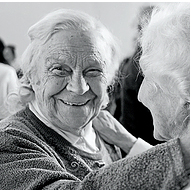
Estudo, estratégia e plano sobre envelhecimento: velhice e políticas sociais no concelho de Cascais
Investigadora
O projeto "Envelhecimento Cascais" teve como principais objetivos a elaboração de um estudo, de uma estratégia e de um plano de ação sobre envelhecimento, velhice e políticas sociais no concelho de Cascais. O processo contou com ampla participação de especialistas, técnicos e cidadãos, mesmo diante do contexto desafiador da pandemia.
Alicerçado nas abordagens da investigação-ação e da co-construção como principais orientações metodológicas, o projeto baseou-se também no referencial teórico da gerontologia crítica, utilizando conceitos e princípios que rejeitam a visão do envelhecimento e da velhice como um simples acúmulo de problemas a serem suportados pela parcela “ativa” da sociedade.
O projeto refere a importância de reconhecer a pluralidade da velhice e de promover políticas públicas que estimulem novos paradigmas, integrando os desafios do desenvolvimento sustentável da economia local e fomentando a inclusão e as relações de cuidado.
Informação do Projeto
2021-07-27
2023-03-31
Parceiros do Projeto
- DINAMIA'CET-Iscte (GEC) - Líder
- CIS-Iscte (H4A)
Como ficar em casa? Intervenções imediatas de combate à Covid-19 em bairros precários da AML
Investigadora Responsável
'Como ficar em casa? Intervenções imediatas de combate à COVID-19 em bairros precários da Área Metropolitana de Lisboa', foi financiado por uma linha especial - GENDER RESEARCH 4 COVID19 - criada exclusivamente para abordar os impactos da pandemia nas desigualdades de género. A máxima 'ficar em casa', baseada no confinamento, distanciamento social e cumprimento das condições de higiene, foi difícil de garantir em bairros precários. A proposta foi construída a partir da participação das mulheres num programa de intervenções rápidas no espaço e nos hábitos quotidianos, visando a implementação de medidas imediatas para minimizar as taxas de infeção em condições de precariedade habitacional.
Informação do Projeto
2020-08-01
2020-11-30
Parceiros do Projeto
- DINAMIA'CET-Iscte (CT) - Líder
(Re)housing. exploring innovative solutions to accommodate the urban poor
Coordenadora Global
Informação do Projeto
2020-07-01
2026-07-01
Parceiros do Projeto
- DINAMIA'CET-Iscte (CT) - Líder
