
 English

Recepção Pública de Comunicação de Ciência
Coordenadora Global
"PuReSC” é um estudo comparativo de larga escala que examinará a receção pelo público dos esforços de comunicação das universidades por meio de investigação empírica em Portugal, Itália, Alemanha e Reino Unido (core partners), Estados Unidos e Taiwan (affiliated partners). O projeto assenta numa metodologia inovadora, focada na comunicação universitária dirigida aos seus públicos, aplicada a amostras representativas da população nestes países e segmentação de audiências.
O projeto é coordenado por Marta Entradas (PI), e localmente pelos colaboradores:
- Martin Bauer (UK)
- Frank Marcinkowski (Germany)
- Giuseppe Pellegrini (Italy)
- John Besley (USA)
- Yiu Li (Taiwan)
Financiado pela Fundação para a Ciência e Tecnologia (€247.104,00)
Informação do Projeto
2025-12-22
2028-12-21
Parceiros do Projeto
- CIES-Iscte - Líder
- LSE - (Reino Unido)
- HHU - (Alemanha)
- Observa - (Itália)
- Michigan State University - (Estados Unidos da América)
- NSYSU - (Taiwan)
Implementação do Plano Nacional para o Radão 2025
Coordenadora Local
O PNRn, aprovado pela Resolução Conselho de Ministros (RCM) n.º 150-A/2022, de 29 dezembro, apresenta-se como um instrumento de planeamento macro da política de proteção efetiva de trabalhadores e da população em geral à exposição ao radão no interior dos edifícios, estabelecendo orientações estratégicas de âmbito nacional, tendo em vista a concretização dos princípios enunciados na legislação da União Europeia (UE) e nacional e com o objetivo de reduzir os riscos de longo prazo decorrentes da exposição ao radão em habitações, edifícios abertos ao público e locais de trabalho. A definição de estratégias e de orientações concretas conducentes: (i) à consciencialização dos riscos de exposição ao radão, (ii) à promoção das medições nos edifícios, (iii) à prevenção nos novos edifícios, (iv) à promoção da remediação em edifícios existentes e (v) à tomada de medidas de proteção específicas para trabalhadores no seu local de trabalho, vai permitir assegurar de forma multissetorial a proteção aos riscos de exposição ao radão e reduzir de forma sustentável os seus efeitos na saúde, em particular, a incidência de cancro do pulmão causado pelo radão.
Informação do Projeto
2025-12-09
2026-06-30
Parceiros do Projeto
- CIES-Iscte
- Fundo Ambiental - Líder (Portugal)
- APA - (Portugal)
- INSA - (Portugal)
- LNEC - (Portugal)
- UC - (Portugal)
- DGS - (Portugal)
- CCV Floresta - (Portugal)
- CCVL - (Portugal)
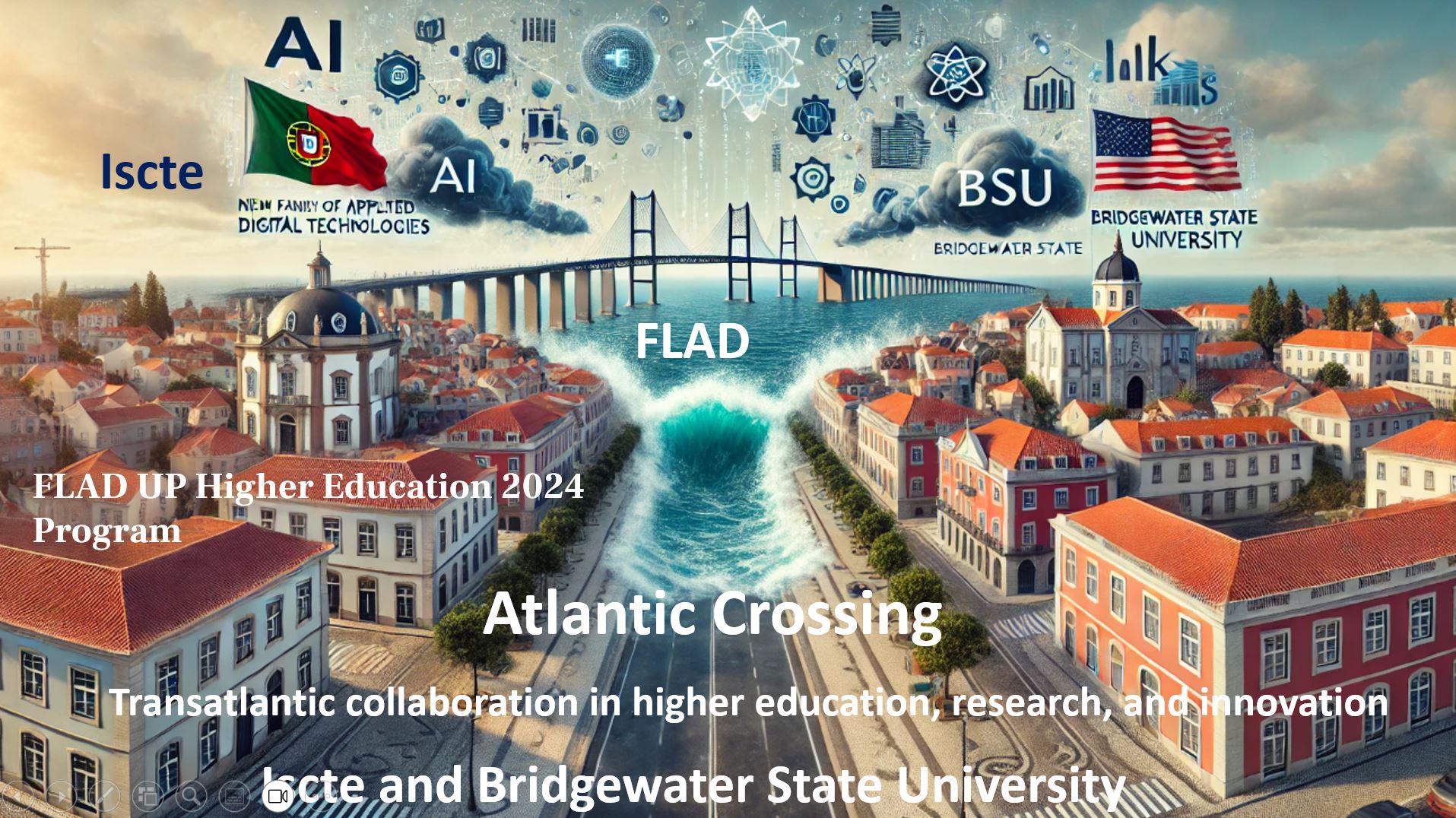
Atravessar o Atlântico para a cooperação científica e de ensino-aprendizagem
Investigadora
O principal objetivo da proposta AtlanticCrossing é desenvolver uma parceria entre duas instituições de ensino superior, uma portuguesa, o Iscte - Instituto Universitário de Lisboa, e uma dos Estados Unidos da América, a Bridgewater State University - BSU. Esta parceria foi concebida para ser mutuamente benéfica, visando iniciar o esforço de desenvolvimento de especializações conjuntas, programas de pós-graduação e a atribuição de graus académicos conjuntos num futuro próximo em áreas científicas de interesse mútuo, tais como Cibersegurança, Inteligência Artificial e Tecnologias da Linguagem, Inovação Empresarial e Ensino-Aprendizagem. Através da colaboração, ambas as instituições poderão tirar partido dos pontos fortes e dos recursos da outra, melhorando a qualidade do ensino e da investigação. A proposta visa ainda desenvolver competências para docentes e estudantes através da Aprendizagem Internacional Colaborativa Online (COIL), aplicada em Unidades Curriculares (UCs) de cursos de licenciatura de ambas as universidades, com enfoque nas áreas científicas acima referidas. O programa inclui actividades ao longo do ano letivo em ambiente COIL e duas estadias de curta duração (1 semana) para docentes e estudantes: uma organizada no Iscte em meados de janeiro, com a visita de docentes e estudantes da BSU, e outra na BSU, na primeira semana de junho, reciprocamente. Coordenaremos projectos de investigação conjuntos e interdisciplinares com ênfase na cibersegurança e nas tecnologias da linguagem. Isto será realizado no âmbito de iniciativas de investigação aplicada e baseada em projectos. Além disso, facilitaremos a participação do Iscte no Simpósio anual de investigação para licenciados da BSU, proporcionando uma plataforma para os estudantes do Iscte apresentarem os seus resultados inovadores neste evento dos EUA. No domínio da cibersegurança, organizaremos sessões de formação conjuntas abrangentes, recorrendo a ambientes competitivos e baseados em desafios, como o “...
Informação do Projeto
2024-10-01
2025-06-30
Parceiros do Projeto
- ISTAR-Iscte (DLS) - Líder
- BSU - (Estados Unidos da América)
Implementação do Plano Nacional para o Radão
Coordenadora Local
Informação do Projeto
2023-11-30
2024-05-31
Parceiros do Projeto
- CIES-Iscte
- Fundo Ambiental - Líder (Portugal)
- APA - (Portugal)
- Instituto Nacional de Saúde Doutor Ricardo Jorge - (Portugal)
- UC - (Portugal)
- LNEC - (Portugal)
- DGS - (Portugal)
- IPAC - (Portugal)
AGENDA “DESCENTRALIZAR PORTUGAL COM BLOCKCHAIN”
Investigadora
A Blockchain é uma tecnologia fundamental para a transição digital da economia e da sociedade. De acordo com o Fórum Económico Mundial, 10% do PIB global será armazenado em blockchain até 2027 e a Organização Mundial do Comércio, citando um estudo da Gartner, estima que, até 2030, a utilização da tecnologia de blockchain poderá acrescentar 3 biliões de dólares ao comércio internacional. De acordo com a PwC, "as tecnologias de blockchain podem impulsionar a economia global em 1,76 biliões de dólares até 2030", sendo os sectores que mais beneficiarão a administração pública, a educação e a saúde.
Apesar desta enorme oportunidade, Portugal ainda não a aproveitou: de acordo com o relatório EU Blockchain Ecosystem Development, em 2020 Portugal detém uma maturidade média a nível europeu.
Esta Agenda juntou várias organizações de blockchain, criando um cluster de 24 empresas portuguesas de blockchain, 15 Organizações de Investigação e Tecnologia (RTO), 5 Entidades Públicas, 2 Associações e 10 outros Parceiros Associados, ligados por negócios e tecnologia, com o objetivo de se tornarem reconhecidos internacionalmente e, assim, contribuírem para uma mudança significativa no perfil de especialização da economia portuguesa, através do investimento em tecnologia de ponta e da contratação de pessoal altamente qualificado.
Probing the impact of integrity and integration on societal trust in science
Coordenadora Local
POIESIS project brings together seven partners from across Europe, who will study the impact of research integrity issues and societal engagement practices on trust in science. As societal dependence on sound scientific research and responsible innovation has become increasingly visible, concerns about public trust and mistrust in science have simultaneously been mounting. This highlights the crucial importance of the cultural authority of science. The debate about societal trust in science is characterised by three intuitively appealing assumptions:
- First, that trust depends on scientists’ capacity to demonstrate high standards of research integrity and ethics, and that breaches of research integrity will lead to mistrust;
- Second, that citizens’ and civil society’s involvement in co-creating research agendas and content makes research more relevant and responsive to society and consequently strengthens trust;
- Third, that institutions can foster integrity and societal integration by enabling and supporting researchers to act responsibly.
Informação do Projeto
2022-09-01
2025-08-31
Parceiros do Projeto
- CIES-Iscte
- AU - Líder (Dinamarca)
- LSE - (Reino Unido)
- WID - (Alemanha)
- NTUA - (Grécia)
- CNRS - (França)
- Agencia Estatal Consejo Superior de Investigaciones Cientificas - (Espanha)
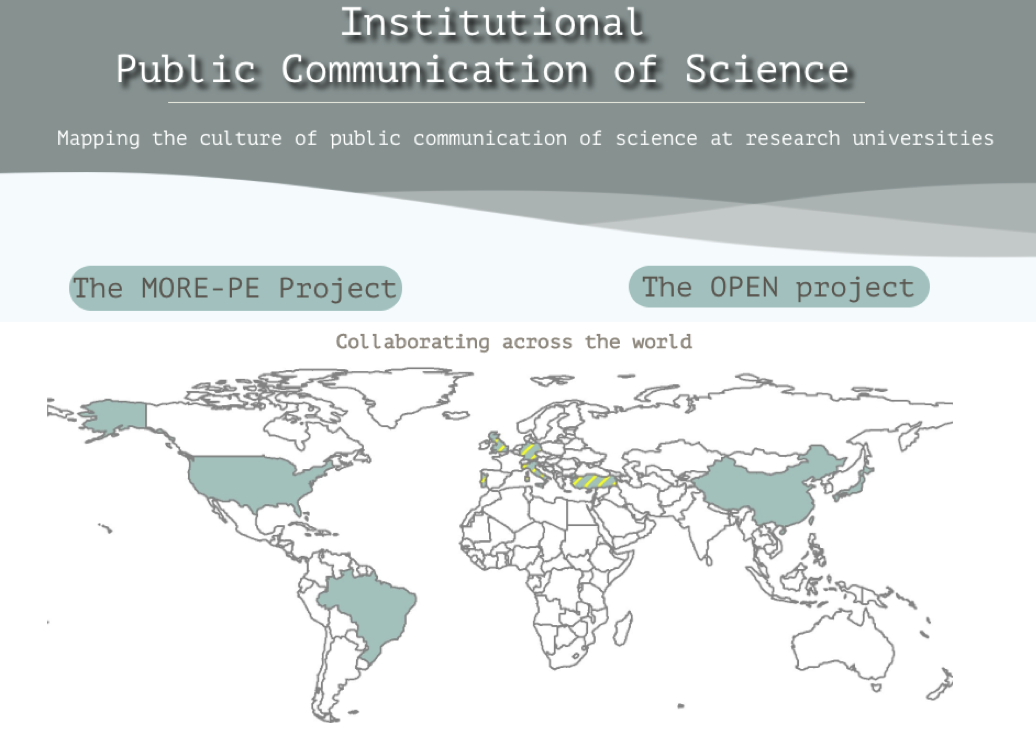
Envolvimento do Público em Ciência e Tecnologia por Organizações Académicas
Investigadora Responsável
O Envolvimento do Público (EP) em C&T tem-se tornado uma atividade crucial para as organizações académicas e de pesquisa. Apesar de a comunicação entre académicos, universidades e o público não ser algo de novo, ganha contornos de urgência num mundo de ciência global e de concorrência entre as universidades por alunos, staff e financiamento. Isto, juntamente com a expectativa, pela parte do Estado e financiadores, de que a investigação aborde os problemas económicos e sociais, resultou em pressão acrescida sobre a demonstração do impacto da investigação na sociedade. A investigação sobre atividades de EP tem-se centrado em cientistas, sendo insuficiente sobre as estruturas institucionais de comunicação de ciência. Mais, não existem dados comparáveis que permitam uma compreensão plena da realidade da comunicação institucional. Isto torna urgente compreender as estruturas de comunicação e as suas funcoes, sendo de crer que esta investigação terá um forte impacto na academia e na definição de políticas. O projecto proposto 'OPEN' - Organisational Public ENgagement (2018-2021) pretende suprir esta necessidade. O estudo sera conduzido em instituições em Portugal, Reino Unido, Itália e Alemanha para mapeamento de praticas. A equipa reúne peritos em inquéritos alargados e com conhecimento do contexto local para a inquirição em cada país. Será o primeiro trabalho empírico deste género, tendo ainda impactos a nível político, institucional e societal, com produção de informação útil para instituições e governos para criação de políticas e práticas para um melhor envolvimento da sociedade na pesquisa.
O projecto é coordenado pela investigadora Marta Entradas (PI), e financiado pela agencia nacional Fundacao para a Ciencia e Tecnologia (240.000 euros) (Ref: PPTDC/COM-OUT/30022/2017).
Informação do Projeto
2018-11-16
2022-10-03
Parceiros do Projeto
- CIES-Iscte - Coordenador
- LSE - (Reino Unido)
- HHU - (Alemanha)
- UniTrento - (Itália)
- Observa - (Itália)
- Istanbul Bilgi University - (Turquia)
Mobilização de REcursos para o Envolvimento do Público com a ciência e a tecnologia
Investigadora Responsável
MORE-PE, visa examinar como centros de pesquisa envolvem a sociedade na sua investigacao. O objetivo final é desenvolver indicadores para avaliar o engajamento público no nível das instituições cientificas. Em particular, o projeto visa reunir uma base de dados global de dados comparáveis sobre a cultura do envolvimento público a nível institucional e inclui colaboradores na Europa, na América do Norte, America do Sul e Asia.
A equipa realizou estudos nacionais em Portugal, Reino Unido, Alemanha, Itália, nos Países Baixos, nos EUA, Brasil, Japao e China; aplicando uma pesquisa de questionário a uma amostra representativa de instituições de pesquisa em cada país.
O projecto, coordenado pela investigadora Marta Entradas, foi financiado pela Fundação para a Ciencia e Tecnologia (FCT) (170.000 euros) (ref: PTDC/IVC-COM/0290/2014).
Informação do Projeto
2016-04-04
2019-05-17
Parceiros do Projeto
- DINAMIA'CET-Iscte (GEC) - Líder
- University of Leiden - (Países Baixos (Holanda))
- LSE - (Reino Unido)
- Michigan State University - (Estados Unidos da América)
- Università degli studi di Trento - (Itália)
- University of Münster - (Alemanha)
- UTA - (Estados Unidos da América)
- NAIS - (China)
- Fiocruz - (Brasil)
- GRIPS - (Japão)
