
 English

Observatório Europeu de Iniciativas e Ferramentas Inteligentes para o Turismo
Investigador Responsável
A adoção da digitalização, da inovação e das novas tecnologias no sector do turismo depende da disponibilidade de ferramentas de turismo inteligentes (STT). Essas ferramentas podem facilitar a otimização da eficiência e da sustentabilidade nas operações turísticas. Além disso, o conhecimento de iniciativas anteriores no domínio do turismo inteligente pode catalisar a referida adoção. O objetivo do projeto EUROSTIT é desenvolver um observatório abrangente que forneça uma visão geral das várias ferramentas e iniciativas de turismo inteligente atualmente disponíveis na Europa. Um conjunto de catálogos publicados foi utilizado como fonte de conteúdos de arranque para uma versão protótipo no contexto do projeto europeu RESETTING, que antecedeu a presente proposta de projeto. O protótipo é deficiente em termos de funcionalidade de pesquisa avançada e fácil de utilizar e de classificação de conteúdos. A multiplicidade de soluções tecnológicas, juntamente com a riqueza de experiências passadas e de lições aprendidas, exige uma abordagem meticulosa e metódica para identificar as soluções tecnológicas óptimas e os princípios subjacentes que devem ser respeitados para alcançar os resultados desejados. Será utilizada uma taxonomia validada, desenvolvida no âmbito do RESETTING, para classificar todas as tecnologias de ponta europeias identificadas. O Observatório EUROSTIT constituirá uma entidade independente associada à unidade de investigação do ISTAR-IUL, centrando-se em questões e desafios relacionados com a transformação digital do turismo, um sector com um impacto significativo na balança de pagamentos de Portugal. A equipa EUROSTIT examinará de forma crítica o ecossistema do turismo inteligente, fazendo avançar os conhecimentos científicos e transferindoos para a sociedade. Além disso, contribuirá para a definição de metodologias de investigação, para a formulação e avaliação de políticas de promoção do turismo sustentável (em termos de ambiente, sociedade e economia) e ...
Informação do Projeto
2025-04-01
2026-03-30
Parceiros do Projeto
- ISTAR-Iscte - Líder
- INESC-ID - (Portugal)
- NEST - Consultor (Portugal)
Adaptive system for crowding monitoring using user's devices fingerprinting
Investigador
The main objective of this project is to provide a flexible system that can be independently deployed by public administration authorities to monitor public spaces, where special events are planned, or anticipated to occur, that are expected to lead to crowding aggregation.
Informação do Projeto
2024-12-19
2026-01-31
Parceiros do Projeto
- IT-Iscte
- ISTAR-Iscte (RAISE )
- IT - Líder (Portugal)
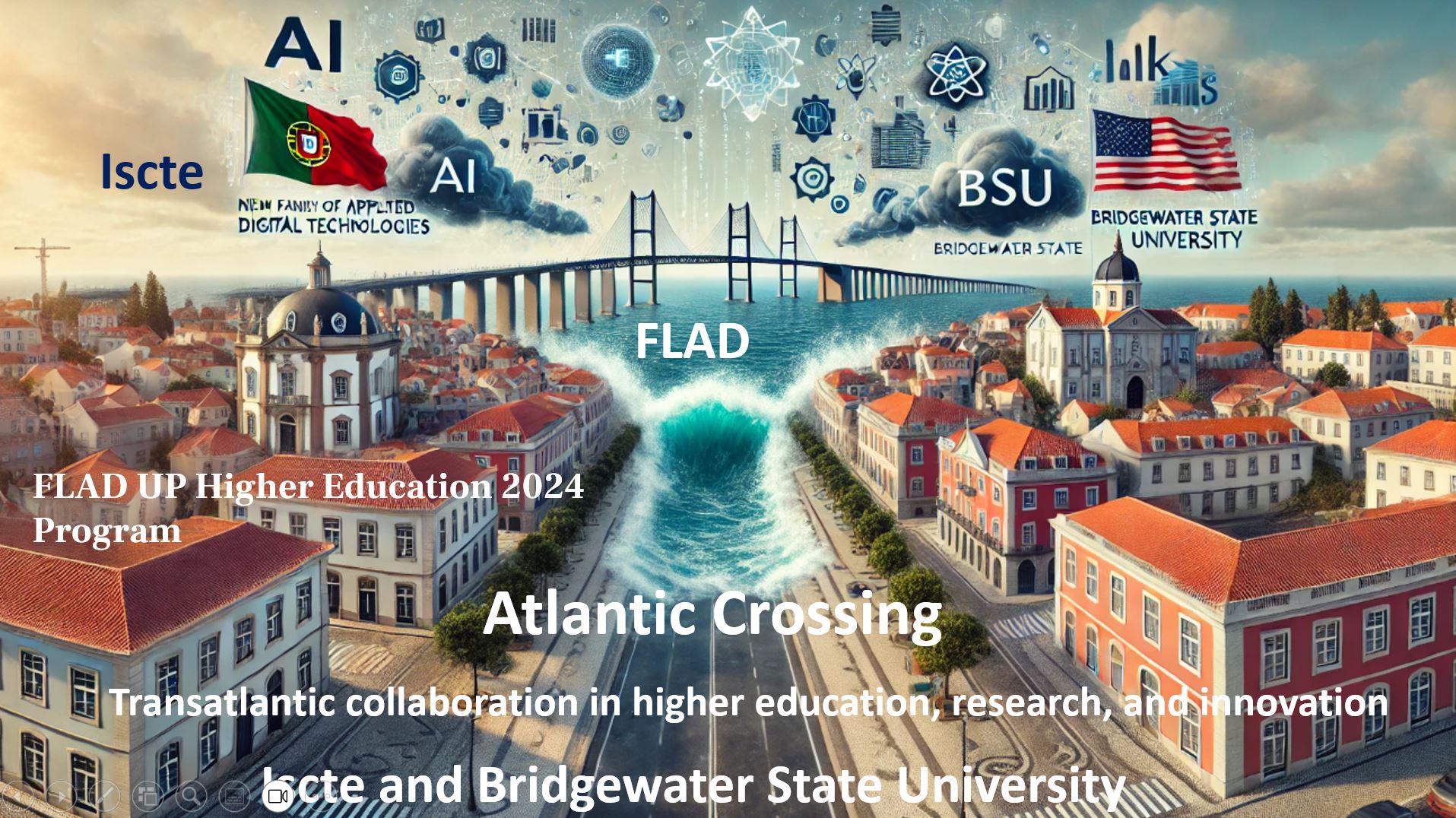
Atravessar o Atlântico para a cooperação científica e de ensino-aprendizagem
Investigador
O principal objetivo da proposta AtlanticCrossing é desenvolver uma parceria entre duas instituições de ensino superior, uma portuguesa, o Iscte - Instituto Universitário de Lisboa, e uma dos Estados Unidos da América, a Bridgewater State University - BSU. Esta parceria foi concebida para ser mutuamente benéfica, visando iniciar o esforço de desenvolvimento de especializações conjuntas, programas de pós-graduação e a atribuição de graus académicos conjuntos num futuro próximo em áreas científicas de interesse mútuo, tais como Cibersegurança, Inteligência Artificial e Tecnologias da Linguagem, Inovação Empresarial e Ensino-Aprendizagem. Através da colaboração, ambas as instituições poderão tirar partido dos pontos fortes e dos recursos da outra, melhorando a qualidade do ensino e da investigação. A proposta visa ainda desenvolver competências para docentes e estudantes através da Aprendizagem Internacional Colaborativa Online (COIL), aplicada em Unidades Curriculares (UCs) de cursos de licenciatura de ambas as universidades, com enfoque nas áreas científicas acima referidas. O programa inclui actividades ao longo do ano letivo em ambiente COIL e duas estadias de curta duração (1 semana) para docentes e estudantes: uma organizada no Iscte em meados de janeiro, com a visita de docentes e estudantes da BSU, e outra na BSU, na primeira semana de junho, reciprocamente. Coordenaremos projectos de investigação conjuntos e interdisciplinares com ênfase na cibersegurança e nas tecnologias da linguagem. Isto será realizado no âmbito de iniciativas de investigação aplicada e baseada em projectos. Além disso, facilitaremos a participação do Iscte no Simpósio anual de investigação para licenciados da BSU, proporcionando uma plataforma para os estudantes do Iscte apresentarem os seus resultados inovadores neste evento dos EUA. No domínio da cibersegurança, organizaremos sessões de formação conjuntas abrangentes, recorrendo a ambientes competitivos e baseados em desafios, como o “...
Informação do Projeto
2024-10-01
2025-06-30
Parceiros do Projeto
- ISTAR-Iscte (DLS) - Líder
- BSU - (Estados Unidos da América)

Relaunching European smart and SustainablE Tourism models Through digitalization and INnovative technoloGies
Coordenador Local
A crise global do COVID-19 desencadeou grandes mudanças nas sociedades em todo o mundo, perturbando a forma como vivemos e conduzimos os negócios. Em toda a Europa, as medidas e restrições impostas devido à pandemia levaram a mudanças repentinas em muitos paradigmas, abrindo caminho para novos modelos de negócios e de operação no mercado. Essa rutura dramática acelerou algumas tendências socioeconómicas, que eram visíveis antes da crise do COVID-19, como a adoção de tecnologias sofisticadas e soluções de dados para facilitar modelos de operação centrados no ser humano, inteligentes e sustentáveis; a incorporação da sustentabilidade e da mitigação das alterações climáticas como princípios não negociáveisde operar e fazer negócios e, por último, mas não menos importante, confiar em soluções inteligentes baseadas em dados para orientar a tomada de decisão com otimização do desempenho comercial e da sustentabilidade.
A indústria do turismo é um dos setores económicos globais que sofreu o impacto mais severo da pandemia COVID-19, o que está associado à sua desaceleração económica. Dados da Organização Mundial do Turismo das Nações Unidas (UNWTO) confirmam que a crise atual é responsável por uma queda global nas receitas de exportação de 750-900 biliões de euros e uma perda de empregos diretos estimada entre 100 e 200 milhões. Com a queda dos lucros e a incerteza da retoma de uma estabilidade nos mercados, está em risco a recuperação para breve das pequenas e médias empresas (PMEs) que, segundo a UNWTO, são responsáveis por 80% do turismo global. Com a perda de receitas e, consequentemente, a fuga de talentos para outros setores económicos, as PMEs do turismo têm de levar a cabo a retoma com recursos limitados.
Através da conceção de uma solução tecnológica dinâmica (plataforma) para transferência de conhecimento e troca de experiências disponibilizada a uma rede de clusters de PME do turismo em seis países, este projeto irá demonstrar como a digitalização pode aceler...
Informação do Projeto
2022-01-02
2024-06-30
Parceiros do Projeto
- ISTAR-Iscte
- BRU-Iscte
- IT-Iscte
- EURECAT - Líder (Espanha)
- TICSUD - (Espanha)
- FEHT-Turism - (Espanha)
- - - (Itália)
- ANHER - (Grécia)
- Albanian Trip - (Albânia)
- AUDAX - (Portugal)
Ciência dos Dados para não programadores
Coordenador Local
The objective of this project is to explore the use of visual programming paradigms to enable non-programmers to be part of the Data Science workforce.
In contrast to existing approaches, which require programming, Scientific Workflow Management Systems (SWMS) can become an alternative to support the visual programming of data science projects. Such systems (e.g. Taverna and Kepler) use a simple graphical, graph-based structure to develop applications.
This simplicity has shown to be suitable in several scientific areas such as bioinformatics, geophysics, and climate analysis. Despite the success of SWMS in data intensive research, they did not reach a state where non-programmers data scientists can use them. They still require some programming and scripting skills to code individual processing tasks. That is why research teams using those systems are usually composed of scientists and software developers.
We propose to extend current SWMS to support the parameterization of generic prebuild workflow templates. Workflow templates capture the processing tasks of data science projects. A template can be seen as a formalized best practice that data scientists can use to solve common data analysis challenges. Templates are developed by multidisciplinary teams of experts and reused by non-programmer data scientists. Parameterized workflows have been used successfully in the field of enterprise computing since 1970 to increase software reuse (e.g. SAP’s parameterized workflows to automate business process models). We claim that the same type of benefits can be obtained by parameterizing scientific workflow templates.
Informação do Projeto
2019-09-17
2019-12-30
Parceiros do Projeto
- ISTAR-Iscte (RAISE )
Sustentabilidade e Autenticidade na oferta turistica
Coordenador Global
Este projeto pretende garantir a sustentabilidade ambiental, económica e social dos territórios e as cadeias de valor que apoiam produtos turísticos, através do desenvolvimento da sustentabilidade de empresas ligadas ao turismo.
O projeto tem ferramentas de gestão da sustentabilidade que visam a certificação, marketing e monitorização da sustentabilidade dos produtos turísticos: i-SUSTENTURIS, e-SUSTENTURIS, e Workshops itinerantes SUSTENTURIS .
I-SUSTENTURIS é um sistema de certificação composto por um conjunto de indicadores de sustentabilidade (ambientals, sociais, e destino), que irá servir para medir e acreditar a sustentabilidade de produtos turísticos, até aqueles de pequenas e médias empresas, habitualmente sem acesso a este tipo de recursos.
E-SUSTENTURIS é uma plataforma de marketing B2B (business to business) que pretende dar visibilidade a produtos de turismo sustentável desenvolvidos localmente para que possam ser incluídos em ofertas mais abrangentes, resultando da cooperação entre vários agentes da indústria turística, incluindo agentes e operadores de viagens globais, com impacto na intermediação entre consumidores e mercados internacionais.
Workshops itinerantes SUSTENTURIS permitem a transferência de conhecimento sobre práticas de gestão responsáveis pelo desenvolvimento da sustentabilidade das empresas tendo em vista a melhoria da sustentabilidade dos produtos turísticos. tendo em conta os resultados dos indicadores i-SUSTENTURIS. Em particular irão promover a introdução da sustentabilidade nas políticas das empresas através do desenvolvimento de planos de ação para a sustentabilidade, a correção da performance do produto com base em indicadores, e a adaptação dos produtos de empresas locais ao turismo.
O projeto SUSTENTURIS é inovador a vários níveis: no foco da sustentabilidade dos produtos turísticos, na avaliação de indicadores de sustentabilidade calculados segundo uma abordagem do ciclo de vida; pela sua transparência e...
Informação do Projeto
2017-01-01
2018-12-31
Parceiros do Projeto
- ISTAR-Iscte (RAISE )
- ESHTE - (Portugal)
- GEOTA - (Portugal)
- FFCT/FCT/UNL - (Portugal)
- ISPA - (Portugal)
- ICNF - (Portugal)
